
- News Updates
- PSU Watch
- Defence News
- Policy Watch
- हिन्दी न्यूज़
- Jobs Watch
- States News
- Event News

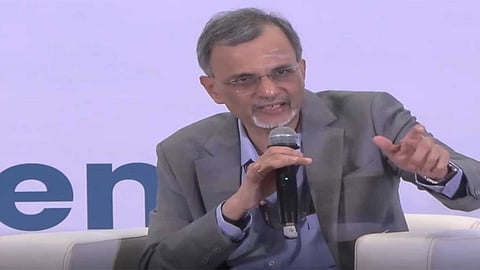
New Delhi: The Chief Economic Advisor V Anantha Nageswaran on Friday made a case for revisiting non-performing asset (NPA) classification norms for micro, small and medium enterprises (MSMEs) by the Reserve Bank, saying the rules should reflect domestic business practices and cash flow patterns rather than follow a globally uniform framework.
From a policy perspective, the Finance Ministry has been advocating a review of the norms, Nageswaran said, highlighting that MSMEs across sectors have different working capital requirements and cash flow cycles.
Follow The PSUWatch Channel on Whatsapp
Under the existing framework, loan accounts are classified as Special Mention Accounts (SMA) based on the period of overdue payments, with categories corresponding to 30 days, 60 days and 90 days. An account is generally classified as a non-performing asset if interest or principal remains overdue for more than 90 days.
The Chief Economic Advisor (CEA) said the transition to SMA classification itself can have significant consequences for borrowers, with businesses potentially facing difficulties even before their accounts are formally classified as NPAs.
"The moment you are classified as SMA, then you almost end up becoming already de facto, if not de jure," he said at the 21st National Conference of Inclusive Growth organised by Sa-Dhan here.
He called for evolving norms that are better aligned with India's business practices and the cash flow patterns of MSMEs, instead of adopting a uniform global standard.
“We need to evolve such norms consistent with our practices and cash flow patterns, rather than adopting a globally uniform pattern. These would be some of the things we need to do (for the MSME sector which is a big employment generator),” he said.
Speaking about ease of doing business, Nageswaran said it impacts MSMEs more than large businesses.
The Union government, under the leadership of the Cabinet Secretary, has also been pursuing deregulation at the grassroots level for MSMEs over the past nearly two years, he said.
He noted that smaller businesses bear a disproportionate burden of compliance costs, both in terms of money and time. Reducing this burden would enable them to devote their limited resources and time to running their businesses and hiring more people, thereby generating employment and delivering tangible benefits on the ground, he said.
The broader strategy for MSME growth should focus on deregulation, skill development, greater utilisation of trade agreements and adopting diverse development models suited to the specific needs and circumstances of different states, he suggested.
Follow PSU Watch on LinkedIN
"We have to leverage the trade agreements we are signing...there is good news that the UK agreement and the European Union agreement, which is going to become operational in two months, both give enormous scope for goods and services of India to reach their markets. And we have to go all out to ensure that we take advantage of it," he said.
About microfinance institutions, Nageswaran said they must avoid over-lending, especially amid the rising use of artificial intelligence technology and digital selling.
"I think from a pure finance perspective, the priority should be savings, insurance and then credit, but the sector usually has reversed the order, and that is not the right sequence. And then there have been frequent bouts of over-lending and mis-selling, and this should be avoided," he said.
The CEA also underscored the need for upskilling workers with the advent of AI.
“AI may actually end up making us realise that our skill and our strength are in labour-intensive growth, given the labour endowment of this country and the demographic sweet spot we are in,” he said.
(PSU Watch is India's Business News centre that places the spotlight on PSUs, Bureaucracy, Defence and Public Policy. 👉 Click to join our channel now: PSUWatch WhatsApp Channel. Prefer LinkedIn? Follow PSU Watch on LinkedIN. Click to stay connected on Twitter here and stay updated.)

