
- News Updates
- PSU Watch
- Defence News
- Policy Watch
- हिन्दी न्यूज़
- Jobs Watch
- States News
- Event News

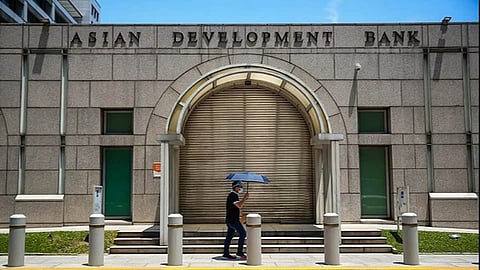
Samarkand: The ongoing Middle East crisis is going to shade off India's GDP growth by 0.6 percent to 6.3 percent and also stoke inflation significantly in the current financial year, as per the latest update, ADB Chief Economist Albert Park said on Tuesday.
The Asian Development Bank (ADB) in April projected India's GDP growth to remain "robust" at 6.9 percent in the current fiscal, and rise to 7.3 percent in the next fiscal, driven by strong domestic demand.
Follow The PSUWatch Channel on WhatsApp
ADB had projected inflation at 4.5 percent for the current fiscal. For India, Park said, "We do find that growth would be lower by 0.6 percent (FY27). This is based on our model scenario. But it would not negatively affect growth next year. India would kind of bounce back next."
Inflation would increase by 2.4 percent this year to 6.9 percent, he told PTI in an interview on the sidelines of ADB Annual Meet here.
"So that's a bit higher than the inflation impacts for the region (Asia-Pacific), because India is more reliant on imported oil and gas. The growth effect, if you take out China, this negative 0.6 percent on growth this year is pretty similar to the region as a whole region as well," he said.
ADB, on April 29, in its special update, lowered the Asia Pacific growth projection for 2026 to 4.7 percent from 5.1 percent earlier, weighed down by prolonged West Asia disruptions.
Asked about El Niño's impact on food production, Park said, "Of course, it's very uncertain. Obviously, whenever there's a bad harvest in India, we have an issue. With higher prices. India accounts for a huge part of the global trade in rice. So then whatever happens in India also often has a big impact on other countries."
That is a concern apart from the rising fertiliser prices, he added.
With the cost of fertilizer going up, farmers will use less fertiliser, which will also reduce yields and also reduce availability later in the year, he said.
It will definitely have a bearing on food prices, but how much would depend on the gas disruption, he added.
To deal with the energy crisis, which occurs every now and then, Park said, "Accelerate the shift to renewable energies, which are all domestically-sourced. Reduces import dependence on other imported energy sources. I think a concern we have from a climate change perspective is that India will go back to coal."
Sounding optimistic about long-term growth prospects for India, Park said, "Growth outlook still looks pretty good for India. There's really a lot of reform momentum. You still see pretty robust domestic demand, investment. I know there's concern in India now, a little bit about foreign direct investment flow. I wouldn't read too much into that."
Follow PSU Watch on LinkedIN
Foreign direct investment will improve, free trade agreements should help, he said, adding that India should continue to reduce import tariffs.
He further said, ADB has been pushing a lot on the idea of better governance of cities and make cities as growth centres, but it has to be a kind of smart urbanisation.
(PSU Watch– India's Business News centre that places the spotlight on PSUs, Bureaucracy, Defence and Public Policy is now on Google News. Click here to follow. Also, join PSU Watch Channel in your Telegram. You may also follow us on Twitter here and stay updated.)

