
- News Updates
- PSU Watch
- Defence News
- Policy Watch
- हिन्दी न्यूज़
- Jobs Watch
- States News
- Event News

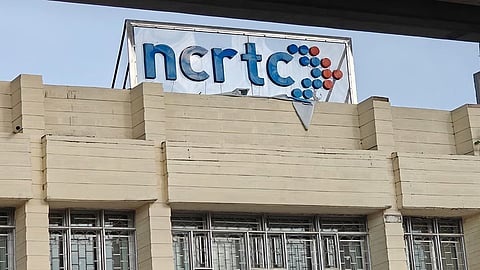
New Delhi: The National Capital Region Transport Corporation (NCRTC) has signed a memorandum of understanding (MoU) with Tata Power Delhi Distribution Limited (Tata Power-DDL) to facilitate the shifting of electrical utilities along the proposed 136.3-km Delhi–Panipat–Karnal Namo Bharat corridor.
The agreement is aimed at ensuring the timely relocation of power infrastructure that could obstruct construction activities along the proposed high-speed regional rail corridor connecting Delhi with key urban centres in Haryana.
Follow The PSUWatch Channel on WhatsApp
Under the arrangement, Tata Power-DDL will supervise the relocation of electrical networks and provide necessary permissions to NCRTC, ensuring compliance with prescribed safety, reliability and statutory requirements.
According to a statement issued by the companies, the utility-shifting work is expected to be completed within one year of its commencement.
The proposed Delhi–Panipat–Karnal Namo Bharat corridor will span 136.3 km and feature 21 stations, including six in Delhi and 15 in Haryana.
Of the total length, approximately 124.82 km will be elevated, while 11.48 km will run underground.
The trains are being designed for a maximum speed of 180 kmph, with a proposed operational speed of 160 kmph. Services are planned at intervals of five to 10 minutes.
Once operational, the corridor is expected to reduce travel time between Delhi and Karnal to approximately 90 minutes, offering a faster alternative to road-based commuting.
The project is intended to strengthen regional connectivity, reduce travel times and support economic activity across the Delhi-Haryana region.
The corridor's alignment intersects with extensive electrical infrastructure, making utility relocation an important preparatory requirement before major civil construction can proceed.
According to the statement, the project involves 38 extra-high-voltage transmission lines operating at different voltage levels, including 765 kV, 400 kV, 132 kV and 66 kV.
Several distribution lines operating at 33 kV, 11 kV and 415 volts will also require shifting or modification. Transformers and other electrical equipment may need to be relocated to accommodate the proposed construction.
The electrical infrastructure along the corridor falls under multiple agencies, including BSES, Tata Power-DDL, Uttar Haryana Bijli Vitran Nigam Limited (UHBVNL), Haryana Vidyut Prasaran Nigam Limited (HVPNL), Power Grid, Bhakra Beas Management Board (BBMB) and JKTPL.
Coordination among these agencies will be essential to minimise disruption to existing electricity supply while clearing the alignment for construction.
The agreement was signed by Kiran Gupta, Chief of Customer Experience, Commercial and Corporate Communications at Tata Power-DDL, and Vijay Kumar, Company Secretary at NCRTC, in the presence of senior officials from both organisations.
Gupta said the collaboration would facilitate the timely implementation of the Namo Bharat corridor while maintaining reliable electricity supply for existing consumers.
The project, identified as an initiative of national importance, is being monitored through the Centre's Project Monitoring Group (PMG) portal.
Shifting existing power infrastructure is a critical component of large-scale railway and metro projects, as delays in obtaining permissions, coordinating shutdowns and relocating transmission lines can affect construction schedules.
For NCRTC, the agreement provides a framework for coordinating utility-related work within Tata Power-DDL's operational jurisdiction.
However, with electrical infrastructure along the corridor managed by several agencies, timely execution will also depend on coordination with other transmission and distribution utilities.
Follow PSU Watch on LinkedIN
Tata Power-DDL, a joint venture between Tata Power and the Government of Delhi, distributes electricity across North Delhi and serves a population of approximately nine million.
The proposed Namo Bharat corridor is expected to strengthen regional transport connectivity between the national capital and Haryana, with the latest agreement marking another preparatory step towards its implementation.
(PSU Watch is India's Business News centre that places the spotlight on PSUs, Bureaucracy, Defence and Public Policy. 👉 Click to join our channel now: PSUWatch WhatsApp Channel. Prefer LinkedIn? Follow PSU Watch on LinkedIN. Click to stay connected on Twitter here and stay updated)

