
- News Updates
- PSU Watch
- Defence News
- Policy Watch
- हिन्दी न्यूज़
- Jobs Watch
- States News
- Event News

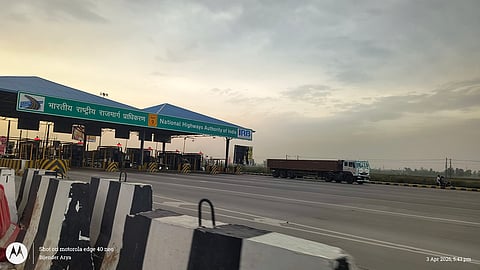
New Delhi: State-owned National Highways Authority of India (NHAI) on Monday said the lane configuration of high-speed national highways will be standardised based on detailed traffic assessment to facilitate seamless movement, as the authority released new comprehensive guidelines for design and development of access-controlled high-speed NHs.
Follow The PSUWatch Channel on WhatsApp
The authority released new comprehensive guidelines that seek to bring uniformity in standards for preparation of Detailed Project Reports (DPRs) of high-speed NH corridors and bring greater consistency in technical standards, strengthen road safety, and improve operational efficiency across the National Highway network, an official statement said.
The guidelines will apply to all upcoming 4/6 lane Greenfield and Brownfield high-speed access-controlled National Highways, it added.
NHAI said the guidelines are aligned with the long-term government of India’s strategic roadmap which envisages the development of 50,000 km of access-controlled High-Speed Corridors under Viksit Bharat 2047, boosting connectivity and reducing logistics costs.
At present, there are no separate standards and specifications governing planning and designing of access-controlled High-Speed National Highways, other than Expressways.
Variations have been observed in the standards adopted for preparation of DPR for such corridors. The new guidelines address this requirement by providing a uniform set of technical and safety provisions, it said.
NHAI said a key focus of the guidelines is on incorporation of additional safety measures appropriate with high-speed traffic conditions on corridors. Special provisions have been prescribed for advance notification of exits and entries, enabling National Highway users to anticipate and safely navigate upcoming access and egress points.
The lane configuration of the High-speed National Highways will be standardised based on detailed traffic assessment.
"Corridors with traffic flow up to 15,000 vehicles with four-lane highway & four-lane structures will have a width of 60 metres.
"Similarly, corridors having traffic flow between 15,000 - 25,000 vehicles with four-lane highway & six-lane structures will have awidth of 70 metres," NHAI said.
Also, according to the state-owned agency, highways with traffic flow between 25,000 – 40,000 vehicles will have a width of 70 metres for asix-lane highway & six-lane structures configuration.
NHAI said interchanges with ramps will be provided at crossings with Expressways, National Highways, State Highways and important arterial roads generating substantial traffic, as well as roads providing connectivity to major traffic-generating destinations such as ports, airports, Multi-Modal Logistics Parks (MMLPs), industrial areas and major tourist destinations.
Follow PSU Watch on LinkedIN
To strengthen access control and prevent encroachments, NHAI said that to prevent unauthorised access and entry of stray cattle onto High-Speed Corridors, the guidelines prescribe construction of a 1-metre-high boundary wall along the outer edge of the corridor.
(PSU Watch is India's Business News centre that places the spotlight on PSUs, Bureaucracy, Defence and Public Policy. 👉 Click to join our channel now: PSUWatch WhatsApp Channel. Prefer LinkedIn? Follow PSU Watch on LinkedIN. Click to stay connected on Twitter here and stay updated)

