
- News Updates
- PSU Watch
- Defence News
- Policy Watch
- हिन्दी न्यूज़
- Jobs Watch
- States News
- Event News

New Delhi: The Ministry of Power has proposed to extend the Electricity (Late Payment Surcharge and Related Matters) Rules, 2022 or LPS rules to independent companies that run standalone energy storage systems. Under the draft amendment, these companies would get the same protection against delayed payment by distribution companies (discoms) that generators, transmission companies and traders already have. The ministry has invited comments on the draft by December 10.
The ministry set out the aim in an explanatory note issued with the draft. “The amendment will give independent companies that run standalone energy storage systems the same protection against delayed payment by electricity distribution companies (DISCOMs) that power generators, transmission companies and electricity traders already have,” the note said.
To do this, the draft rewrites the scope of the rules. “These rules shall be applicable to outstanding dues of generating companies, transmission licensees, electricity trading licensees and energy storage service providers,” the proposed sub-rule said.
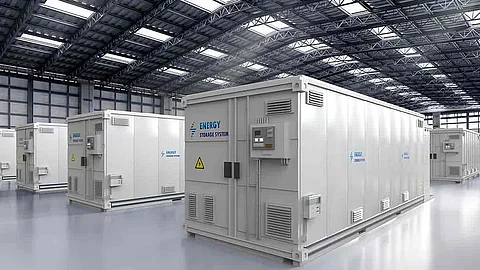
The draft adds a new category, the energy storage service provider. It defines this as “an entity providing energy storage as a service or supplying electricity using energy storage system, that is not owned by a generating company, transmission licensee, distribution licensee or consumer.”
According to the note, this closes a gap in the current rules. Rule 18 of the Electricity Rules, 2005 allows storage to be owned by a generator, a transmission company, a discom, a consumer or an independent storage company. Storage owned by a generator takes the generator’s legal status, so the late payment surcharge (LPS) rules already cover it. Independent providers have no such cover. “However, if a DISCOM delays payments of an independent energy storage service provider, such a company gets none of the protections described above and must rely only on its contract,” the note said.
The draft does not create separate provisions for these companies. “Wherever the LPS Rules protect generators, transmission companies and traders, the draft adds these storage providers,” the note said.
The LPS rules were made in 2022 to stop unpaid bills from piling up at discoms, the note said. Under the rules, a bill must be paid by the due date set in the power purchase agreement. If the agreement is silent, payment is due within 45 days of the bill.
A surcharge applies to delayed amounts. According to the note, it starts at the State Bank of India’s one-year lending rate plus 5 percent and rises by 0.5 percent for each month of delay. The surcharge cannot exceed the starting rate by more than 3 percent. Discoms must also keep a letter of credit from a bank, which the supplier can draw on if a bill is not paid.
The rules also penalise continued default. If a bill remains unpaid two-and-a-half months after it is presented, the discom is barred from buying power in the short-term market and on the power exchanges. If the dues remain unpaid, its long-term supply is cut progressively. Normal access is restored within one day of payment, the note said.
The ministry linked the proposal to the expected growth of storage. According to the note, battery energy storage system (BESS) capacity is projected to rise from around 15 GWh in October 2026 to 321 GWh by 2035-36. Pumped hydro storage (PSP) capacity is expected to grow from 44 GWh in September 2026 to 630 GWh over the same period.
Storage projects need large upfront investment, which is recovered through payments over many years, the note said. “Investors and banks will invest into such projects only if they are confident that these payments will be made on time,” it said. “Mobilising investments of this scale would require an assured and timely payment mechanism for energy storage developers.”
According to the note, storage developers and their lenders will get certainty of payment. The ministry said this would attract more investment and lower the cost of finance, and could bring down the cost of storage over time.
The note said discoms that pay their bills on time would see no change. “DISCOMs that pay on time are not affected. The amendment creates no new charge. The surcharge applies only when bills are paid late,” it said. Consumers would benefit indirectly through more storage capacity, better use of solar and wind power and a more reliable supply, according to the ministry.
The draft has been circulated to Central ministries, the Central Electricity Authority (CEA), central and state electricity regulators, state governments, discoms, power exchanges and industry associations. Once the comments have been considered, the amendment will be finalised, legally vetted and notified in the Official Gazette, the note said.
(PSU Watch is India's Business News centre that places the spotlight on PSUs, Bureaucracy, Defence and Public Policy. 👉 Click to join our channel now: PSUWatch WhatsApp Channel. Prefer LinkedIn? Follow PSU Watch on LinkedIN. Click to stay connected on Twitter here and stay updated)
