
- News Updates
- PSU Watch
- Defence News
- Policy Watch
- हिन्दी न्यूज़
- Jobs Watch
- States News
- Event News

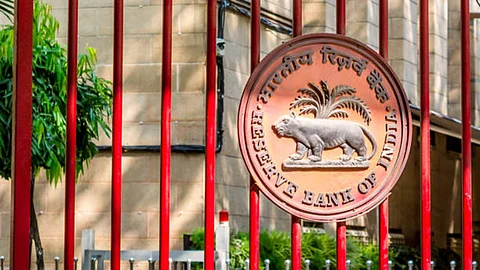
New Delhi: The Reserve Bank of India (RBI) on Thursday accepted bids worth Rs 50,000 crore in the first tranche of its open market operation (OMO) sale of government securities to absorb excess liquidity from the banking system.
The auction is part of the central bank’s announced Rs 1 lakh crore OMO sale programme spread across three tranches. The remaining two auctions, of Rs 25,000 crore each, are scheduled for September 21 and September 28.
Follow The PSUWatch Channel on WhatsApp
The RBI accepted bids across six government securities, with the largest amount, Rs 18,840 crore, allocated to the 8.28 percent security maturing in 2032 at a cut-off yield of 7.0090 percent.
It accepted Rs 12,645 crore in the 5.77 percent security maturing in 2030 at a cut-off yield of 6.8589 percent.
Other accepted bids comprised Rs 7,005 crore in the 7.59 percent security maturing in 2029 at 6.6007 percent; Rs 7,255 crore in the 6.79 percent security maturing in 2029 at 6.7023 percent; Rs 1,005 crore in the 7.61 percent security maturing in 2030 at 6.8191 percent; and Rs 3,250 crore in the 6.68 percent security maturing in 2031 at 6.9080 percent.
Follow Energy Watch on LinkedIN
The banking system’s liquidity surplus was estimated at about Rs 7.38 lakh crore as of September 16, according to RBI data.
OMO sales absorb rupee liquidity as banks and other investors pay the central bank to purchase government securities.
The surplus has been fuelled by strong mobilisation of Foreign Currency Non-Resident (Bank), or FCNR(B), deposits. These deposits brought foreign currency into the system, while subsequent swaps with the RBI supplied rupee liquidity to banks.
Government spending, including month-end salary and pension payments, also added to the surplus.
(PSU Watch– India's Business News centre that places the spotlight on PSUs, Bureaucracy, Defence and Public Policy is now on Google News. Click here to follow. Also, join PSU Watch Channel in your Telegram. You may also follow us on Twitter here and stay updated.)

