
- News Updates
- PSU Watch
- Defence News
- Policy Watch
- हिन्दी न्यूज़
- Jobs Watch
- States News
- Event News

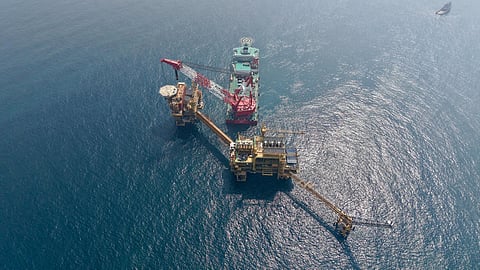
New Delhi: State-run Oil and Natural Gas Corporation (ONGC), BP and Reliance Industries Limited (RIL) are exploring a proposal to develop a common offshore infrastructure facility worth around $1 billion in the Mahanadi basin to facilitate the production and evacuation of natural gas and condensate from deepwater and ultra-deepwater fields, according to a report published by The Economic Times.
The proposal, initiated by the Ministry of Petroleum and Natural Gas, is currently at a preliminary stage, with technical consultants expected to be appointed shortly, ET reported, citing two industry executives familiar with the discussions.
The proposed infrastructure-sharing arrangement is intended to substantially reduce development costs, improve operational efficiency and make smaller and marginal hydrocarbon discoveries economically viable by eliminating the need for individual operators to establish separate offshore facilities.
Deepwater and ultra-deepwater exploration projects typically require substantial capital investment in production, processing and transportation infrastructure. These high upfront costs often make smaller discoveries commercially unattractive, even when recoverable hydrocarbon reserves are available.
According to the ET report, the proposed common facility would allow multiple operators to pool production and share infrastructure, potentially accelerating the commercial development of discoveries that might otherwise remain stranded.
The facility would primarily handle natural gas, along with condensate produced from offshore fields.
ONGC, BP, Reliance Industries and the petroleum ministry did not respond to queries from ET, the report said.
The technical configuration of the proposed facility has yet to be finalised. The options under consideration include a floating production, storage and offloading (FPSO) facility or a fixed offshore installation.
An FPSO-based system could offer greater deployment flexibility, as much of the infrastructure can be fabricated before being transported offshore. A fixed installation, meanwhile, could require a longer construction period.
Industry executives cited by ET indicated that developing infrastructure of this scale could take at least three to four years.
The proposed arrangement draws on infrastructure-sharing models already adopted in international offshore oil and gas provinces, including the North Sea.
Under such arrangements, multiple operators jointly develop production and transportation infrastructure, while other producers can subsequently access the facilities by paying usage charges.
The approach could help reduce duplication of capital expenditure, optimise infrastructure utilisation and improve the economics of offshore hydrocarbon production.
For India, the proposed Mahanadi basin hub could represent a significant shift towards collaborative offshore development, particularly as the country seeks to accelerate domestic natural gas production and reduce dependence on imported energy.
However, the project’s investment structure, ownership arrangement, technical specifications and implementation timeline remain undecided, with the proposal still at the exploratory stage.
(PSU Watch is India's Business News centre that places the spotlight on PSUs, Bureaucracy, Defence and Public Policy. 👉 Click to join our channel now: PSUWatch WhatsApp Channel. Prefer LinkedIn? Follow PSU Watch on LinkedIN. Click to stay connected on Twitter here and stay updated.)
