
- News Updates
- PSU Watch
- Defence News
- Policy Watch
- हिन्दी न्यूज़
- Jobs Watch
- States News
- Event News
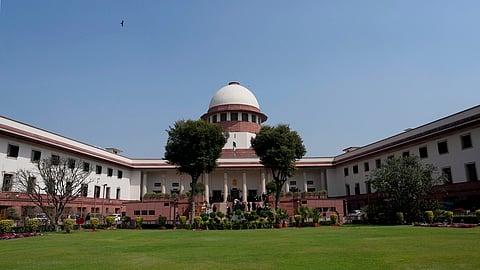
New Delhi: A public interest litigation (PIL) matter has been filed in the Supreme Court, challenging the Centre's decision to impose a merchant discount rate (MDR) on specified UPI person-to-merchant transactions of above Rs 2,000, saying the levy has been introduced without adequate statutory safeguards, transparency or public consultation.
Follow The PSUWatch Channel on WhatsApp
The Government has introduced a 0.4 percent fee on UPI payments of more than Rs 2,000 made to merchants from October 15. Under this, a merchant discount rate (MDR) of 0.4 percent is to be levied on person-to-merchant transactions of above Rs 2,000. However, no MDR is to be levied on UPI transactions of up to Rs 2,000.
The plea has been filed by advocate Anjan Datta, challenging the Centre's September 14 notification and the MDR framework announced on September 15, which is stated to come into effect from October 15.
According to the petition, the new framework provides for a 0.4 percent MDR on general P2M (person-to-merchant) UPI transactions exceeding Rs 2,000, subject to a cap of Rs 300 for transactions of Rs 75,000 and above.
It also provides for a flat Rs 5 MDR for transactions of above Rs 2,000 in specified essential and thin-margin sectors, including railways, telecommunications, insurance, fuel and agricultural inputs, while capital-market transactions attract an MDR of 0.02 percent, capped at Rs 300.
The petitioner has contended that UPI transactions of up to Rs 2,000 and all person-to-person transfers will remain free, while small merchants receiving up to Rs 1 lakh per month through UPI QR codes are exempted.
Follow PSU Watch on LinkedIN
The plea challenges the constitutional validity of the amended section 10A of the Payment and Settlement Systems Act, 2007, alleging that it gives unguided powers to the executive to decide which electronic payment modes would receive the no-charge protection.
It further questions the fixation of the rates, transaction thresholds, caps and sectoral classifications through what the petitioner describes as a press release, alleging that the complete operative instrument prescribing these charges has not been published in the Official Gazette.
The petitioner has also questioned the distinction between UPI transactions and RuPay debit-card payments, pointing out that the notification continues the no-charge protection for RuPay debit cards without a monetary ceiling.
The plea alleges that the framework is arbitrary and discriminatory, and may adversely affect merchants, particularly those with low margins, while also raising concerns over possible indirect consumer burden and digital exclusion.
The petitioner has sought the quashing or suspension of the framework insofar as it imposes an MDR on UPI transactions of above Rs 2,000. Alternatively, it has sought a reconsideration of the framework after transparent consultation, publication of empirical data and an impact assessment, besides safeguards for micro and small enterprises.
The plea also seeks an independent review by the Reserve Bank of India (RBI) and the Union government.
(PSU Watch is India's Business News centre that places the spotlight on PSUs, Bureaucracy, Defence and Public Policy. 👉 Click to join our channel now: PSUWatch WhatsApp Channel. Prefer LinkedIn? Follow PSU Watch on LinkedIN. Click to stay connected on Twitter here and stay updated)

