
- News Updates
- PSU Watch
- Defence News
- Policy Watch
- हिन्दी न्यूज़
- Jobs Watch
- States News
- Event News

New Delhi: The government on Wednesday acknowledged that certain BS-III vehicles manufactured before 2016 may require replacement of some rubber components and gaskets when operated on E20 fuel, even as it maintained that extensive studies have found no need for engine modifications and no significant impact on vehicle performance.
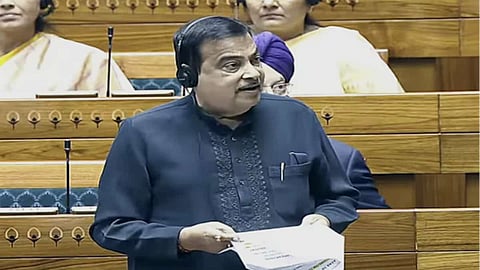
Replying to a question in the Rajya Sabha, Union Road Transport and Highways Minister Nitin Gadkari said tests conducted on vehicles running on petrol blended with 20 percent ethanol (E20) found no major concerns relating to engine durability, drivability or material compatibility.
Follow The PSUWatch Channel on WhatsApp
However, he said vehicles conforming to BS-III emission norms, introduced from April 1, 2005, and manufactured before 2016, may require replacement of certain rubber parts and gaskets during routine servicing.
The minister said a joint study by Indian Oil Corporation (IOCL), the Indian Institute of Petroleum (IIP), Dehradun, the Society of Indian Automobile Manufacturers (SIAM) and the Automotive Research Association of India (ARAI) found that neither two-wheelers nor four-wheelers required engine modifications to run on E20 fuel.
"Only in case of testing done on BS-III vehicles introduced from April 1, 2005, and manufactured prior to 2016, some rubber parts and gaskets may require replacement, which can be easily managed during the routine servicing regime of the vehicle," Gadkari said in his written reply.
According to the study, even older or legacy vehicles did not show significant deterioration in performance or abnormal wear and tear. No issues were observed in parameters such as drivability, startability, metal compatibility or plastic compatibility, he added.
On concerns over reduced fuel efficiency, Gadkari said mileage depends on multiple factors, including driving conditions, vehicle maintenance, tyre pressure, traffic congestion, load carried and driving habits, and cannot be attributed solely to the use of E20 fuel.
The rollout of E20 petrol has, however, remained a contentious issue, with opposition parties and consumer groups raising concerns over the compatibility of older vehicles, possible reduction in fuel efficiency, increased maintenance costs and the absence of clear liability norms in the event of engine or fuel system failures.
The government has consistently maintained that the transition to E20 has been gradual and backed by scientific validation. Automobile manufacturers have also stated that they continue to honour warranty claims for vehicles using E20 fuel.
Gadkari said an Inter-Ministerial Committee constituted under NITI Aayog in December 2020 had comprehensively examined vehicle compatibility, mileage and efficiency aspects of ethanol blending. The committee's Roadmap for Ethanol Blending in India 2020-25, released in June 2021, was prepared after consultations with automobile manufacturers, oil marketing companies and agricultural experts.
The report, which preceded the nationwide rollout of E20 fuel in April 2026, assessed engine durability, material compatibility, fuel systems, corrosion resistance, emissions, drivability, fuel economy and overall vehicle performance through laboratory studies, durability trials and field validation.
Follow PSU Watch on LinkedIN
The minister also highlighted that India's Ethanol Blended Petrol (EBP) Programme began with a pilot project in 2001, followed by the introduction of E5 fuel in 2006. Ethanol blending remained at around 1.53 percent until 2013-14 before being scaled up in phases after expanding production capacity, infrastructure and the regulatory framework.
BS (Bharat Stage) emission norms prescribe limits for pollutants such as carbon monoxide, hydrocarbons, nitrogen oxides and particulate matter emitted by vehicles and have been progressively tightened over the years to curb vehicular pollution.
(PSU Watch is India's Business News centre that places the spotlight on PSUs, Bureaucracy, Defence and Public Policy. 👉 Click to join our channel now: PSUWatch WhatsApp Channel. Prefer LinkedIn? Follow PSU Watch on LinkedIN. Click to stay connected on Twitter here and stay updated)

