
- News Updates
- PSU Watch
- Defence News
- Policy Watch
- हिन्दी न्यूज़
- Jobs Watch
- States News
- Event News

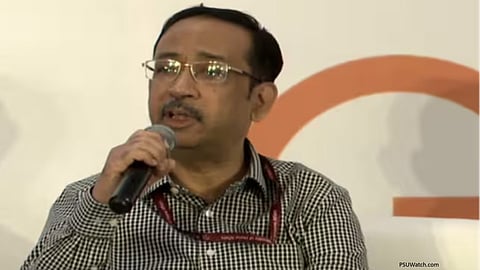
New Delhi: India’s electric-vehicle industry must prepare for the withdrawal of government subsidies over the next four to five years and build a market capable of sustaining itself without continued state support, Heavy Industries Secretary Kamran Rizvi said on Thursday.
Addressing the 66th Annual Convention of the Society of Indian Automobile Manufacturers (SIAM), Rizvi said subsidies had already ended in some vehicle categories and would eventually be phased out elsewhere as electric-vehicle adoption gathered momentum.
“I can lay out some key challenges which will emerge in the next four or five years. The first is that subsidies and government support will come to an end—and, in fact, they have already come to an end in some sectors,” he said.
Follow The PSUWatch Channel on WhatsApp
The remarks put the onus on automobile manufacturers to reduce costs, expand charging infrastructure and invest more heavily in technology as the government gradually moves away from using subsidies as the principal driver of EV sales.
Rizvi said India had made significant progress in electric mobility with government support, particularly in three-wheelers. Electric models now account for about 50 percent of three-wheeler sales—far above the earlier target of 10 percent by 2026.
The share could rise to 75 percent within the next two to three years, he said.
Electric two-wheelers account for around 7 percent of sales in their segment, while EV penetration in passenger cars stands at about 4-5 percent. Electric buses present a substantially larger opportunity, Rizvi said, with demand currently exceeding the industry’s ability to supply them.
However, sales growth alone would not create a viable EV ecosystem. Rizvi criticised the automobile industry’s limited role in developing charging networks, saying vehicle manufacturers had largely left the responsibility to standalone charging companies.
“SIAM members need to get their act together on electric charging. We have left this charging business to charging companies,” he said.
Original equipment manufacturers, or OEMs, must play a direct role in ensuring reliable charging availability, particularly along highways, he added.
The government has identified 60 high-priority road corridors that require assured charging coverage. The Heavy Industries Ministry has approved Rs 2,000 crore that could be made available to automakers for developing the necessary infrastructure.
“We should do it in the next two to three years so that all the important highways are saturated,” Rizvi said.
The call for greater industry participation assumes significance because charging availability and reliability remain major obstacles to wider EV adoption, particularly for long-distance passenger travel and commercial transport. Expanding the number of vehicles without creating a dependable charging network risks leaving the transition heavily concentrated in urban and short-distance segments.
Rizvi also pressed automobile and component manufacturers to increase expenditure on research and development, pointing to the financial strength of their balance sheets.
“Your balance sheets are very strong. You can afford to spend on research,” he said.
Greater investment in R&D would help Indian companies reduce the time required to acquire new capabilities and move from adopting overseas technologies to developing proprietary products and systems, he added.
“India needs to become an inventor of technology,” Rizvi said.
Speaking at the convention, Road Transport and Highways Secretary V Umashankar said the transition had made future technology choices considerably more complex for the automobile industry.
Unlike a decade ago, when the broad technological direction was relatively settled and the focus was largely on improving vehicle efficiency, manufacturers must now choose among competing fuels and powertrains.
“Ten years ago, the direction was known. It was common. It was just about improvements, innovations and efficiency,” Umashankar said.
Follow PSU Watch on LinkedIN
“Now we are placed in a position where fuel is also becoming an issue, and that issue will need to be tackled with the same spirit of cooperation,” he added.
The government’s message to manufacturers was therefore twofold: policy support helped create the initial EV market, but future growth will increasingly depend on whether the industry can deliver affordable vehicles, reliable charging and domestically developed technology without relying indefinitely on subsidies.
(PSU Watch is India's Business News centre that places the spotlight on PSUs, Bureaucracy, Defence and Public Policy. 👉 Click to join our channel now: PSUWatch WhatsApp Channel. Prefer LinkedIn? Follow PSU Watch on LinkedIN. Click to stay connected on Twitter here and stay updated)

